
AI is Fundamentally Transforming the Professional Workforce

AI Summary
AI is fundamentally transforming professional workflows from traditional linear processes to iterative human-AI collaboration cycles. The shift from creation to curation affects software development, creative work, and enterprise architecture through "prompt → generate → review → refine" workflows. With 71% of organizations using generative AI and some stated achievements of 250-300% ROI, AI amplifies rather than replaces human expertise, creating higher demand for skilled professionals. Success requires mastering prompt engineering, output validation, and iterative refinement. Enterprise leaders must invest in workforce evolution alongside technology deployment, treating AI adoption as collaborative amplification rather than replacement to achieve meaningful competitive advantage.
Technology is moving faster than ever and it's not just changing how we work, it's completely rewriting the rules of professional expertise.
After over two decades of work in enterprise digital transformation across the largest names in a number of industries, I've witnessed countless technology waves reshape business operations. But what we're experiencing now with AI is fundamentally different. This isn't another tool in the toolkit or an optimization layer on existing processes. We're witnessing the complete rewrite of how professional work gets done, and the implications for enterprise leaders are profound.
The data tells the story: 71% of organizations now regularly use generative AI in at least one business function ( The state of AI: How organizations are rewiring to capture value - McKinsey), with leading enterprises reporting 250-300% ROI ( Nucleus Research ) through AI-driven workflow transformation. But the numbers only hint at the deeper transformation happening in professional workflows across every industry.
The Fundamental Shift
Traditional professional workflows have operated on linear principles for decades. In software development, we followed the waterfall model: requirements → design → code → test → deploy. In creative work, we moved through sequential phases: brief → concept → execution → review → delivery. In enterprise architecture, we progressed through documentation → analysis → design → implementation.
AI is obliterating these linear sequences, replacing them with iterative cycles of prompt → generate → review → refine. This shift represents the most significant change in professional workflows since the advent of digital collaboration tools.
I've experienced this transformation firsthand through tools like Claude Code, which has revolutionized how I approach software development. Instead of spending time crafting code from scratch, I now engage in "vibe coding" where I am describing what I want to build in natural language, reviewing the generated code, and iteratively refining through additional prompts and manual adjustments.
The workflow has fundamentally changed from creation to curation and direction. Where I once wrote code line by line, I now spend 30% of my time crafting precise prompts, 20% waiting for AI generation, and 50% reviewing and refining outputs. This isn't just faster, it's an entirely different cognitive process that requires different skills and produces better results.
The Development Revolution
The software development landscape exemplifies this transformation most dramatically. GitHub Copilot has reached 15 million users with 60% quarter-over-quarter growth ( GitHub Copilot crosses 20M all-time users - TechCrunch), but the real story isn't adoption rates, it's how developer roles are fundamentally evolving.
Working with Claude Code has transformed my daily development practice. Instead of opening an IDE and starting with a blank file, I begin with a conversation. I describe the functionality I need, the constraints I'm working with, and the broader architectural context as I work through the development cycle. The AI generates initial code that often captures 70-80% of my intent, then we iterate together to achieve the final solution.
The most striking change is that junior developers can now tackle problems that previously required senior expertise, while senior developers can focus on architectural decisions, code review, and strategic direction. Research shows AI coding assistants boost developer productivity by 26% ( New Research Reveals AI Coding Assistants Boost Developer Productivity ), with the highest impact among junior developers. But here's the critical insight: this amplification only works with proper skilled oversight.
I've seen AI-generated code drift dramatically off-course when developers lack the expertise to guide and validate outputs. The AI might produce syntactically correct code that completely misses the business logic requirements, creates security vulnerabilities, or ignores performance considerations. The demand for skilled code reviewers and AI directors has actually increased, not decreased.
The most successful development teams I've worked with have embraced this new role definition. Senior developers become "AI orchestrators," managing context across multiple AI interactions, ensuring consistency with architectural patterns, and providing the strategic oversight that prevents AI outputs from accumulating technical debt.
Creative Transformation
The creative industries are experiencing an equally profound transformation. 83% of creative professionals have adopted generative AI ( How Generative AI Has Transformed Creative Work ), but the most successful implementations don't replace creative expertise, they amplify it through iterative collaboration.
In my work with enterprise marketing teams, I've observed the emergence of what I call "AI directors," creative professionals who have mastered the art of guiding AI tools through iterative refinement cycles. Instead of starting with a blank Creative Cloud document, they begin with text prompts that generate initial concepts in any application of their choice, Gemini, ChatGPT, Midjourney,Firefly, Stable Diffusion, etc. Then use traditional creative tools to refine, adjust, and perfect the outputs.
The workflow transformation is remarkable. A senior art director recently described their new process: "I spend my morning having conversations with AI about visual concepts, generating dozens of variations in minutes. Then I spend my afternoon using my creative expertise to select the most promising directions and refine them into brand-consistent, strategically sound creative assets."
This iterative approach has produced measurable results. HubSpot's marketing teams save an average of 12.5 hours per week ( Why Top Performing Teams Use AI Workflow Automation ) through AI integration, while maintaining and improving creative quality through enhanced iteration cycles and rapid concept exploration.
But the creative vision, brand consistency, and strategic thinking remain entirely human domains. The AI provides raw creative material; the human provides direction, refinement, and strategic purpose. Teams that try to use AI as a replacement rather than a collaborator consistently produce generic, off-brand results that miss strategic objectives.
Why AI Creates Higher Demand for Skilled Professionals
Here's what might seem counterintuitive: AI tools are creating higher demand for skilled professionals, not lower. The reason lies in the nature of the human-AI collaboration model.
AI amplifies human capability, but it requires sophisticated human guidance to produce valuable outputs. In code generation, this means understanding software architecture, security implications, and business logic. In creative work, it means maintaining brand consistency, strategic messaging, and emotional resonance. In enterprise architecture, it means balancing technical constraints with business objectives.
The professionals thriving in this new environment aren't those who resist AI, but those who become expert AI collaborators. They develop new competencies in prompt engineering, output validation, and iterative refinement while maintaining their core domain expertise.
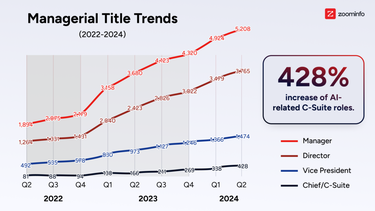
I've observed salary premiums of 15-20% for professionals who demonstrate mastery of AI-assisted workflows compared to those working in traditional linear processes. Amazon's upskilling programs show participants experiencing average salary increases of 8.6% ( Reskilling and Upskilling in the AI Age ), while LinkedIn data reveals AI skills have increased by at least 100% across all sectors since 2016 ( AI is changing work – the time is now for strategic upskilling ).
The market is clearly rewarding professionals who can effectively direct AI tools rather than those who are replaced by them.
Enterprise Architecture Evolution
In my enterprise architecture practice, AI has transformed how I approach requirements gathering, system design, and implementation planning. Traditional architecture workflows relied heavily on extensive documentation phases: requirements documents, technical specifications, architecture decision records.
Now, I use AI as a collaborative thinking partner for exploring solution spaces. Instead of spending weeks documenting every requirement detail upfront, I engage in iterative exploration with AI tools to rapidly prototype architectural approaches, identify potential challenges, and refine solutions based on stakeholder feedback.
This approach has compressed typical architecture timelines by 40-60% while improving solution quality through enhanced exploration of alternatives and faster stakeholder validation cycles.
But the success depends entirely on architectural expertise to guide the exploration, validate technical feasibility, and ensure alignment with enterprise constraints. The AI accelerates the thinking process; it doesn't replace the thinking itself.
Preparing and Enabling Your Workforce
For enterprise leaders navigating this transformation, the strategic imperative is clear: invest in workforce evolution alongside technology deployment. The organizations achieving meaningful competitive advantage aren't just adopting AI tools, they're systematically developing human expertise in AI collaboration.
Successful implementation requires three key elements:
- Skills Development: Invest in prompt engineering, output validation, and iterative refinement training. These aren't technical skills, they're cognitive approaches to human-AI collaboration that apply across domains.
- Process Redesign: Move from linear approval-based workflows to iterative collaboration cycles. This requires reimagining how work gets done, not just layering AI onto existing processes.
- Quality Frameworks: Develop robust review and validation processes for AI-generated outputs. The most successful teams have clear criteria for evaluating AI contributions and systematic approaches for iterative improvement.
The enterprises that embrace AI as a collaborative amplifier rather than a replacement technology achieve the most significant productivity gains and competitive advantages. Those that treat AI adoption as a technology implementation rather than a workforce transformation consistently underperform expectations.
Common Questions
AI is replacing linear processes with iterative cycles of prompt → generate → review → refine, fundamentally shifting workflows in software development, creative work, and enterprise architecture. This transformation demands new skills focusing on curation and direction of AI outputs rather than manual creation
Roles focused on AI such as “LLM engineers” and “AI engineers” have emerged, experienced professionals guiding AI tools, reviewing AI-generated outputs to ensure quality and strategic alignment. Key skills include prompt engineering, output validation, and iterative refinement, applied alongside core domain expertise
AI coding assistants boost developer productivity by 26%, especially aiding junior developers to tackle complex problems, while senior developers focus on high-level oversight. Proper skilled guidance is essential to avoid errors or technical debt from AI-generated code.
AI amplifies human capability but requires sophisticated oversight to produce valuable outputs. Skilled professionals mastering AI collaboration earn salary premiums and are rewarded by the market, as they combine domain expertise with collaborative AI skills.
Leaders should invest in skills development (prompt engineering, validation), redesign processes for iterative collaboration, and develop quality frameworks for AI output review. Successful companies treat AI adoption as workforce evolution, not just technology implementation.
The Future of Professional Expertise
We're in the early stages of the most significant transformation in professional work since the industrial revolution. AI isn't replacing human expertise—it's fundamentally changing how that expertise gets applied. The professionals and organizations that recognize this distinction and invest accordingly will define the next era of business performance.
Undoubtedly, major shifts in all business processes are drastically changing as a result of AI. The question for enterprise leaders isn't whether to embrace AI-assisted workflows, but how quickly and effectively you can evolve your workforce to thrive in an environment where human expertise and AI capability combine to create unprecedented professional leverage.
The future belongs to those who master the art of human-AI collaboration. The transformation is just beginning.