
Same race. Same mistakes.
Different Finish line.
The AI Race to the Moon: Why the Majority are Failing

AI Summary
The global AI boom resembles the 1960s Space Race—spectacular, expensive, and misunderstood. Tech giants will invest over $320 billion in AI next year, yet MIT and BCG report that the majority of enterprises fail to generate measurable value, and abandonment of AI initiatives are increasing. The reason is simple: most confuse experimentation with execution. Organizations launch “random acts of AI” without data governance, aligned KPIs, or scalable delivery models.
The companies seeing real returns invest first in readiness. They build integrated data layers, clear governance, and teams that connect AI outputs to business outcomes. McKinsey’s Lilli platform is one example of this discipline, while others repeat McDonald’s costly missteps. The real race isn’t about who deploys AI first, but who designs the infrastructure, talent, and process to sustain it.
In 1969, millions watched Neil Armstrong step onto the lunar surface. Most countries watching had zero intention of starting their own space program, and they were right not to. Today's AI competition between OpenAI, Google, Meta, Anthropic, and Microsoft mirrors that spectacle. Enterprises are making the same error: confusing the excitement of watching with the necessity of joining.
The assumption feels inevitable, adopt AI or risk obsolescence. OpenAI hit a $500 billion valuation. Tech giants are pouring $320 billion into AI infrastructure in 2025 alone. Today, every board meeting includes "AI strategy" on the agenda.
Yet MIT and BCG Research show that there are more AI failures than those demonstrating tangible value from their AI investments. The failure rate is accelerating: 42% abandoned most AI initiatives in 2025, up from 17% in 2024. Even if you dismiss the exact numbers, directionally it is extremely concerning.
The $280 Billion Gamble That Changed Everything
When President Kennedy committed to landing on the moon in 1961, the United States had spent exactly 15 minutes in space. What followed was unprecedented: $280 billion in today's dollars over 14 years, peaking at 4.41% of the federal budget in 1966. The Soviet Union matched with over $30 billion.
Critics questioned why billions went to "collecting moon rocks" when pressing social needs demanded attention. The Apollo program came within five votes in the Senate of having its funding cut entirely. Physicist Ralph Lapp argued that if NASA truly generated positive returns, it should operate as a private company.
Yet by 1971, MRIGlobal found the $25 billion spent on civilian space R&D had returned $52 billion. The program eventually generated 25,000 spin-off technologies (GPS, satellite communications, miniaturized electronics) with a documented 33% rate of return.
Today's AI race operates at comparable scale:
- Microsoft: $80 billion in AI infrastructure (2025)
- Google: $75 billion commitment
- Meta: $60-65 billion spending
- Amazon: Over $100 billion
- Combined: $320+ billion from major players
OpenAI projects losses of $44 billion between 2023 and 2028 even as revenue grows, betting everything on eventual dominance. The ROI remains as uncertain as moon rocks once seemed.
Why Watching Isn't Participating
In the 1960s, only two nations possessed the resources and expertise to meaningfully participate in the Space Race. The gap between leaders and followers was measured in decades.
Today presents a similar dynamic, though barriers appear deceptively lower. Yes, 78% of organizations use AI in at least one business function. 99% of Fortune 500 companies have integrated AI technologies. But integration and value creation are different achievements.
BCG's research reveals the divide:
- AI leaders achieve 1.5x higher revenue growth and 1.6x greater shareholder returns
- These leaders represent just 4% of companies surveyed
- The remaining 96% are stuck in pilot purgatory or abandoning initiatives
- 88% of pilots never reach production
Non-leaders paradoxically pursue twice as many AI opportunities as leaders yet achieve half the ROI. They're mistaking activity for progress, launching "random acts of AI" disconnected experiments chasing the latest model releases without clear business strategy.
When McDonald's AI Started Adding Bacon to Ice Cream
McDonald's deployed an IBM-powered AI voice ordering system across 100+ locations in 2024. In controlled environments, the technology worked beautifully. In real drive-thrus, it added bacon to ice cream orders and couldn't stop adding Chicken McNuggets as one viral TikTok showed an order reaching 260 nuggets.
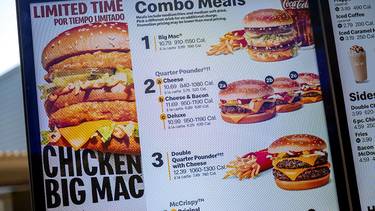
After three years and substantial investment, McDonald's shut down the program in June 2024. The failure wasn't technological, it was insufficient real-world testing, poor data quality for diverse accents, and premature scaling before solving core accuracy problems.
Contrast this with McKinsey's Lilli platform. By building a specialized Retrieval-Augmented Generation system grounded in 100,000+ curated internal documents, McKinsey achieved:
- 72% employee adoption
- 50,000 consultant hours recovered monthly (worth $12 million)
- Proposal development reduced from two days to under three hours
The difference? McKinsey invested in data infrastructure, governance frameworks, and organizational readiness before deploying AI.
The Foundation Crisis Nobody Talks About
AI doesn't fix broken processes, it amplifies them at scale. When a Fortune 500 financial services client sought help with "low AI adoption," their real problem wasn't technology resistance. Customer data lived in 47 disconnected systems. Master data governance was nonexistent. Basic quality issues plagued every integration.
The research validates this pattern:
- Poor data quality is the primary obstacle to AI success
- Gartner predicts 60% of AI projects will be abandoned due to data quality alone
- Organizations with comprehensive data quality strategies see 70% increases in model performance
- Yet 75% of organizations still lack AI-ready data
A leading UK bank generated 5X increases in click-through rates for personalized lending—not through powerful models, but through robust customer data platforms with clean, integrated information. Success patterns share this foundation-first approach: treating AI as an amplifier of existing capabilities rather than a replacement for missing infrastructure.
Lessons from the Race to the Moon
The Space Race taught us three critical lessons that apply directly to AI adoption:
1. Infrastructure investments generate unexpected returns - Miniaturization for spacecraft led to smartphones. Mission control communications evolved into satellite networks and the internet. Materials science for heat shields transformed aviation. The spillovers exceeded direct value.
2. Strategic patience beats frantic activity - Countries that waited and adopted proven space technologies benefited more than those attempting hasty, underfunded programs. They gained satellite communications without moon program costs.
3. Foundation determines trajectory - Launch failures weren't about rocket sophistication, they were about ground support, weather monitoring, and pre-flight checks. The unglamorous infrastructure determined success.
These patterns repeat in AI. A regional bank pursuing fraud detection discovered their required data improvements also enhanced credit assessment, customer segmentation, and compliance generating 3X anticipated value across unrelated business lines.
The Real Competition
The technological capability gap is expanding daily. OpenAI projects $100-125 billion in annual revenue by 2029. Microsoft's Azure AI business runs at $13 billion annually, growing 175% year-over-year.
But the gap that matters most isn't technological, it's organizational. It's not whether you have access to GPT-4 or Claude or Gemini. It's whether you have the data quality, process maturity, and governance frameworks to deploy AI that generates measurable value.
The companies winning aren't those with the most AI projects or biggest innovation budgets. They're the 26% who invested in a strategic foundation first and now achieve 2X the ROI of their experimenting competitors.