
Considering a Headless Framework
The Untold SPA Story

AI Summary
Many teams adopt headless frameworks without fully understanding the trade-offs, leading to higher costs, slower delivery, and frustrated marketing teams. Headless excels in complex, dynamic experiences like checkout flows or applications, but it often adds unnecessary complexity for content-heavy sites. Traditional CMS platforms deliver faster time to market, stronger SEO, and easier authoring for non-technical users. Evaluating long-term costs shows headless projects often require significantly larger investments over time. The most effective approach is often hybrid, pairing headless for transactional experiences with a CMS for top-of-funnel content to balance flexibility, scalability, and business agility.
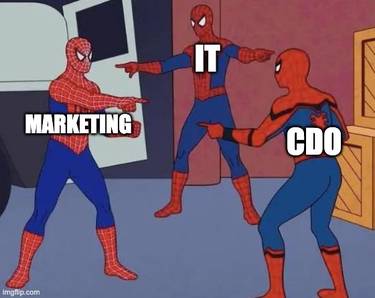
Your technology team wants React, your marketing team needs results now, and you only care about the bottom line. Chances are, more than one group in this trio is going to end up disappointed.
I've watched dozens of Fortune 500 companies migrate to headless JavaScript frameworks over the past five years. It doesn't matter if it is React, Next.js, Angular, Vue, or any other flavor of SPA, the pattern repeats: six months in, marketing teams file complaints about developer bottlenecks. Twelve months in, executives question why a simple content update requires three sprints and six weeks. Eighteen months in, organizations quietly discuss returning to traditional platforms.
The data tells a clear story. Headless architecture works brilliantly in areas where heavy backend services are required, like authenticated spaces and checkout flows. For top-of-funnel marketing websites where you express your brand, showcase products, and make critical first impressions, the math for headless rarely works.
Common Questions
Technology teams advocate for modern frameworks like React for flexibility and scalability, but marketing teams need agility and immediate publishing capabilities. SPA architectures typically slow down marketing agility and increase development bottlenecks but they do add extreme flexibility as is the nature of any custom solution.
Most organizations see initial enthusiasm fade as maintenance complexity, delivery delays, and marketing frustration escalate, many times leading to internal discussions about reverting to traditional CMS platforms.
A headless SPA MVP usually takes 6 to 12 months to launch, while a traditional CMS project can reach production in 3 to 4 months due to built-in templates and authoring tools.
A five year total cost of a traditional enterprise CMS can start around $200K - $360K whereas headless solutions are anywhere from $1M - $2M.
Because each analytics, A/B testing, or tag management integration must be custom-coded to work with SPA’s event-driven nature, multiplying development time by 20x or more compared to CMS plugin installs that typically have prehardened those integrations.
Teams typically allocate 30 - 35% of their time to maintenance, testing, and updates, often exceeding 1,000 hours per year just for framework and API upkeep.
Heavy javascript frameworks create processing on the client or bot prior to rendering negatively impacting customer experience, SEO rankings, SEM quality score, and overall visibility to all technologies. As customer trends change over time, technologies that cannot pick up your content cannot provide it to potential customers.
Align the choice with your business model. If your core traffic and conversions come through search and marketing pages, a headful CMS offers the fastest ROI. If your value lies in dynamic customer interactions, SPA may pay off. There also may be the opportunity to create a hybrid approach where top of funnel pages are delivered via a CMS and portions where service integrations are extremely important may leverage a SPA framework.
Use a traditional CMS for top-of-funnel marketing and landing pages while integrating a SPA framework only in authenticated, transactional, or state-heavy sections combining marketing agility with technical power.
Signing Up for a SPA Solution
When you commit to a single-page application architecture, you sign up for four realities that most organizations underestimate:
- Development costs that multiply faster than expected
- Technical complexities that compound over time
- SEO and SEM performance penalties that erode visibility
- As the application grows, so does the load on client negatively impacting porformance
Time and Investment Costs
Enterprise headless implementations require 6 to 12 months minimum to reach production with just an MVP. Compare this to traditional headful CMS platforms that ship with themes, templating engines, and a UI that lower initial development and authoring time significantly, sometimes down to 3 to 4 months for enterprise.
Data shows that roughly 30% of development projects overrun with more than 15% of them not only overrunning on timelines but costing over 200% (Project Cost Overrun: Understanding, Managing, and Preventing). McKinsey goes as far to state that in their studies, costs overran estimates by an average of 79% (How EVM Forecasts Delays and Cost Overruns in Capital Construction). Only 25% of projects come within 10% of budget and timeline.
From personal experience across leading enterprises, I've observed that by the time a headless application goes live, requirements have changed and the business and marketing teams are asking for more features and functionality. This leaves the development team trying to work through their backlog of bug fixes while fielding new feature requests. Ultimately, the development teams feel underwater, the marketing department feels they cannot do their job, the solution is mediocre at best, and you're left with an underperforming digital platform that consumed a year of development resources and hundreds of thousands or millions of dollars.
Conservative Dollars and Cents Comparison
Traditional CMS five-year total:
- Initial setup: $50,000 to $100,000
- Initial MarTech integration: $10,000 to $20,000
- Maintenance: $20,000 to $40,000 annually
- MarTech integration: $10,000 to $20,000 annually
- Five-year total: $180,000 to $360,000
Headless CMS five-year total:
- Initial setup: $200,000 to $400,000
- Initial MarTech integration: $200,000 to $350,000
- Maintenance: $120,000 to $200,000 annually
- MarTech maintenance: $60,000 to $100,000 annually
- Five-year total: $1.2 million to $1.95 million
The most significant differences come from content production and development costs, not license fees (How to Calculate the TCO of a Content Management System). Organizations budget for platform costs but get blindsided by integration and maintenance expenses.
Why Integration Costs Multiply
Adding any tag manager (Adobe Launch, Tealium, or Google Tag Manager) takes anywhere from a half hour to a few hours depending on complexity. Building the same integration in React requires 20 to 40 hours of developer time because of the event-based architecture. This represents roughly a 20x cost multiplier for a single tool before we even get into ongoing enhancements and support.
The numbers get worse across your full marketing stack. Installing a complete MarTech stack (analytics, tag manager, A/B testing, personalization, marketing automation) takes 14 to 30 hours in traditional CMS platforms. The identical stack in headless architecture demands 344 to 636 hours. That's 23 times more developer time.
Data collection to support Adobe Analytics or Google Analytics integrations? Traditional CMS extensions generally need 4 to 8 hours. Headless implementations consume 40 to 80 hours. A/B testing tools like Target or Optimizely show the most dramatic gap: 2 to 4 hours for traditional plugins versus 60 to 120 hours for custom headless builds. This stems mainly from race conditions between JavaScript libraries and API response timing.
The Ongoing Maintenance Burden
Your developers spend 30 to 35% of their time on maintenance instead of building features (Developers Spend 30% of Their Time on Code Maintenance). This breaks down to 19% on maintenance, 12% on testing, and 4% on security. Developers spend 17.3 hours weekly on code maintenance, representing 42% of their work time (How Much Time Do Developers Spend Actually Writing Code?).
Technical debt ranks as the number one frustration for 62 to 63% of developers (Professional Developers | 2024 Stack Overflow Developer Survey). That's more than twice the next issue.
The maintenance burden extends beyond initial implementation and new features. You need to make changes to support version updates constantly.
React evolved from version 17 in 2020 through 18 in 2022 to 19 in 2024. Each major release introduced breaking changes. React v19 removed propTypes, defaultProps, Legacy Context, string refs, and the entire react-test-renderer shallow API. Organizations with thousands of components face weeks to months of migration work.
Next.js 15 brought the App Router, described as "the most significant architectural change since Next.js launch." Version 14 raised minimum Node.js to 18.17+. Version 15 requires React 19 and changes caching defaults. Community reports describe upgrading from version 11 to 13 as "extremely difficult."
Angular requires major releases every six months with breaking changes. Moving from Angular 6 to 17 demands four-stage upgrades consuming 3 to 6 months with dedicated teams.
For teams of five developers maintaining a React or Next.js application, this represents 900 to 1,100 hours annually purely for framework maintenance. At $75 per hour blended rates, that's $67,500 to $82,500 in annual maintenance costs for framework churn alone.
67% of developers have experienced unexpected API breaking changes (Breaking Changes: Why Your API Monitoring Is Failing You). When Google Analytics migrated from Universal Analytics to GA4 in 2023, traditional CMS users clicked "update plugin" and tested for two hours. Headless implementations required 80 to 120 developer hours rewriting all tracking code.
With 5 to 10 MarTech tools updating 2 to 4 times yearly, the annual maintenance burden reaches 100 to 400 hours for headless versus 10 to 20 hours for traditional CMS plugins.
Unforeseen Search Impacts
Bots can now render JavaScript, but the page load time for SPAs is extremely long because the entire application expands as new pages are added. Google requires 9x more time to crawl JavaScript pages compared to traditional HTML (All JavaScript SEO Best Practices You Need To Know For 2024). Analysis of 100,000+ Googlebot fetches shows half of all pages wait at least 10 seconds for rendering. The 90th percentile experiences delays up to 3 hours. The 99th percentile waits up to 18 hours (How Google Handles JavaScript Throughout the Indexing Process).
This delay creates measurable business impact for marketing sites where search visibility drives revenue.
Search engines must wait for JavaScript execution before meaningful content appears. When JavaScript fails or times out during rendering, your content never gets indexed. Data reveals 39% of mobile pages have LCP elements not statically discoverable (Performance | 2024 | The Web Almanac by HTTP Archive).
Core Web Vitals became official ranking factors in June 2021. Yet only 38% of mobile home pages pass all three Core Web Vitals metrics (Understanding Core Web Vitals and Google Search Results). The March 2024 shift from First Input Delay to Interaction to Next Paint raised the bar higher. INP scores run 35.5% worse than FID on mobile devices.
Framework-specific data shows React applications would see 11% fail Core Web Vitals with INP versus passing with FID. Vue sites show only 8% failure rates. WordPress sites? Just 6% would fail.
Slow rendering also impacts paid advertising as the Quality Score decreases due to poor experience, driving up cost per click. Your SEM budget suffers twice: lower organic rankings and higher paid advertising costs.

There is a Place for SPAs
LARQ achieved 80% conversion rate increase over three months with headless checkout. Burrow saw 30% conversion increase in two months alongside 50% site speed improvement (4 Headless Commerce Success Stories). These weren't marketing sites. They were transactional flows where eliminating page reloads during critical conversion moments directly impacted revenue.
K2 Sports launched 8 brands across 16 sites in under 9 months with 75% faster site creation and 50% productivity boost (8 Use Cases and Real-Life Examples of Headless CMS). The key? They needed genuine omnichannel content delivery across web, mobile apps, kiosks, and emerging channels.
Headless works when:
- Complex state management for shopping carts, user preferences, real-time data
- Authenticated experiences requiring personalized dashboards
- Transactional workflows where conversion optimization justifies investment
Headless fails when:
- Content-heavy marketing sites with anonymous users consuming information
- Search (SEO or AEO) serves as primary traffic source requiring immediate indexing
- Frequent updates make development overhead unjustifiable
- Simple requirements met by out-of-box traditional CMS features
Recommendations from Industry Leaders
By 2026, at least 70% of organizations will be mandated to acquire composable digital experience platform technology, as opposed to monolithic suites, compared to 50% in 2023 (Gartner: Predicts 2024: Machine Customers, GenAI for CX, Composable DXP).
But Gartner simultaneously cautions: "Monolithic DXP suites are making slow progress toward composability, but a purely headless approach lacks the user-friendly business tooling of a monolithic, close-coupled suite."
Forrester highlights similar challenges as noted prior with integration challenges, complexity in composability, challenges in optimization and maintenance of DXP stacks made up of modular headless vendors (The Forrester Wave: Digital Experience Platforms, Q4 2023).
40% of respondents "were unsure where to start" when evaluating headless (The State of Web Development — The Growth of Headless CMS). The skill gap persists as a primary obstacle. Moving to headless is not as straightforward as a WordPress site build, with the community of specialized developers remaining smaller.
Evaluate Your Situation
Evaluate your specific situation honestly.
Choose headless when:
- Performance is paramount with sub-second page loads providing competitive advantage
- You have 5+ full-time frontend developers dedicated to the platform
- Initial investment is acceptable: $300,000 to $500,000 first year, $150,000 to $250,000 annually ongoing
Stay traditional when:
- Primary channel is web with 90%+ of traffic from website
- Marketing team self-sufficiency is critical for daily operations
- Development budget sits below $200,000 annually
- Quick time-to-market is essential with campaigns launching in weeks
- Standard marketing stack uses common tools with existing plugins
The composite organization that achieved 295% ROI over three years had $25 million to $2.1 billion in revenue and implemented SPA in the right applications (Forrester Total Economic Impact of Contentstack Headless CMS Platform). At that scale, 80% reduction in content development time and 90% reduction in publishing time generate millions in value.
For businesses with $500,000 annual revenue investing $75,000 in headless implementation, the 3 to 5 year payback period likely doesn't make sense. The break-even point sits around $1 million+ annual online revenue as a rough guideline.
Consider a Hybrid Approach
Technology teams do nothing but build tech debt when they chase architectural trends without validating business fit. Headless JavaScript frameworks provide genuine advantages for the right use cases. The problem emerges when organizations apply headless to content-focused marketing sites without adequate resources, realistic timelines, or appropriate requirements.
Your technology choice should follow your business model, not the other way around. Ask whether you have the use case, resources, and timeline tolerance to capture headless benefits before committing to a multi-year, multi-million dollar transformation.
The vast majority of businesses should maintain a headful CMS-driven approach for their top-of-funnel pages. When the level of integration with back-office services justifies it, apply SPA frameworks. This hybrid approach ensures your top of funnel stays strong and your conversion rates stay high. You get the marketing agility and SEO performance of traditional CMS where it matters most, while leveraging headless architecture where complex state management and backend integration provide clear value.