
Customer-First Data Foundations Win Every Platform Transition

AI Summary
After 20+ years in search optimization, one truth remains: companies that deeply understand customer behavior win across every platform transition. While myself and others chased black-hat SEO tactics in the 2010s, smart companies studied their customers' actual needs and language patterns. Today's search landscape spans SEO (Google), GEO (ChatGPT/AI powered search), and AEO (voice search). The revelation: identical customer-focused practices work across all three. Success comes from understanding how customers naturally seek trustworthy information, understanding the search technologies but not gaming individual algorithms.The strategic opportunity: Google's AI competition crisis rewards customer-centric enterprises. Build data foundations that serve understanding the customer first, then focus on the technologies whether it is Google's JSON-LD today or AI platforms tomorrow.
Twenty years of search evolution has taught me one unchanging truth: companies that deeply understand their customers' search behavior thrive regardless of platform changes. Whether your customers found you through AltaVista in 1998, Google in 2008, or ChatGPT in 2025, the winners always start with the same foundation: data-driven customer understanding.
As someone who has been in SEO since the early 2000s supporting both start-ups and enterprises, I've watched this evolution from the trenches, first wielding black-hat SEO tools picked up from conference hotel rooms, now as an executive helping Fortune 500 companies navigate the AI transformation. The technology shifts dramatically, but the fundamental lesson remains constant: know your customer first, then adapt your technology to serve them.
Larry Page and Sergey Brin created the PageRank algorithm envisioning search engines that would understand what users actually meant, not just match keywords they typed, but their actual intent. After decades of gaming, manipulation, and algorithmic cat-and-mouse, that vision is finally becoming reality. The irony? It's happening at a time when Google sees the infancy of its future threat, AI Chatbots, and the companies winning are those who never stopped focusing on customer intent over platform tactics.
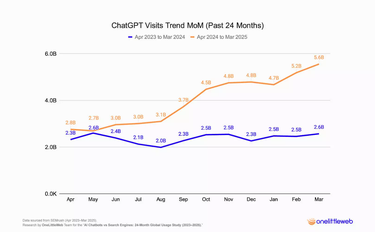
2024 vs 2025 Month Over Month ChatGPT Visit Trends - onelittleweb
From SENuke Seminars to Customer Understanding
In the 2010s, I stood in packed conference halls at PubCon and SMX watching SEOs demonstrate SENuke campaigns that could rank sites overnight. For $67/month, you could automate the creation of hundreds of Web 2.0 properties, spin content across article directories, and build tiered link pyramids that would make any keyword dreams come true. The software's visual campaign builder looked like mission control for manipulating Google's algorithm.
We bought expired domains at NameJet auctions for hundreds or thousands of dollars, hunting for aged domains with clean Wayback Machine histories and strong backlink profiles. Private Blog Network (PBN) operators spread sites across different hosting providers and IP ranges, recreating original content themes to avoid Google's footprint detection. The math was compelling: spend $500 on a premium expired domain, add quality content, and potentially generate thousands in revenue for competitive niches like legal or finance.
Keyword stuffing was an art form. We'd analyze competitor pages and reverse-engineer their density formulas, cramming target phrases into content until it barely resembled human language. Hidden text on white backgrounds, CSS-concealed elements, and footer link farms turned websites into keyword museums that somehow ranked on page one.
The tools were sophisticated, the communities were passionate, and the results were undeniable. Until they weren't.
Google Penguin in 2012 began systematically destroying link manipulation schemes. Panda had already devastated content farms and thin sites. By 2014-2016, the SENuke footprints became easily identifiable, and PBN operators watched their networks get manually penalized in coordinated strikes. The same foundation-less tactics that delivered quick wins became expensive technical debt.
Here's what we missed in our platform-gaming obsession: while we were reverse-engineering Google's algorithm, the smartest companies were reverse-engineering their customers. They studied server logs to understand navigation patterns. They analyzed search queries to decode customer language. They tracked conversion paths to map decision journeys.
Google's algorithm wasn't the enemy we were fighting, it was an intelligence system trying to solve the same problem we claimed to solve, and the same problem the best companies had already solved: understanding what customers actually need and delivering it effectively. We wanted users to find relevant, helpful content. Google wanted to serve relevant, helpful content. Our tactics assumed Google couldn't recognize quality, so we created signals to fool it. But every manipulation attempt actually taught Google's systems to recognize authenticity better, while customer-focused companies were already building that authenticity.
The Unchanging Foundation: Customer Data Drives Platform Success
Here's what hasn't changed across every platform transition: the companies that invest in understanding their customers' actual needs, language, and search behavior always win. The technology shifts from Yahoo directories to Google algorithms to AI chatbots, but the fundamental approach remains identical.
In 2005, we analyzed server logs to understand how customers navigated our sites. In 2015, we studied search console data to optimize for Google's algorithms. In 2025, we analyze AI citation patterns to appear in ChatGPT responses. The tools evolved, but the principle stayed constant: let customer data drive your strategy.
A Fortune 100 bank I worked with discovered their customers searched for mortgage information differently across platforms. On Google: "best mortgage rates 2024 first-time buyer." In ChatGPT: "explain mortgage rate differences for someone buying their first home with good credit." Same customer need, different interface language. By maintaining rich customer data about both intent patterns, they optimized for both platforms simultaneously.
When Google Penguin destroyed link manipulation schemes and Panda devastated content farms, those customer-focused companies barely noticed. Their deep understanding of customer needs made them platform-agnostic. They simply shifted their well-researched customer insights from one technical implementation to another.
The Convergence: Customer Intent Powers SEO, GEO, and AEO
Today's search landscape demands fluency across traditional Search Engine Optimization, Generative Engine Optimization (GEO) for AI platforms like ChatGPT, and Answer Engine Optimization (AEO) for voice assistants and featured snippets. The surprising discovery: the same customer-focused practices work across all three.
Common Questions
SEO ranks for Google and Bing, GEO gets cited by AI like ChatGPT, AEO wins featured answers with direct question-focused content.
Use customer-focused language, concise answers, and authoritative sources. The use of structured data (JSON-LD) impacts some search technologies but not all.
Deep customer understanding helps content adapt and succeed across changing search platforms.
Focus on clear, accessible answers, optimize for mobile and site speed, render structured schema markup server-side.
Use question-based headings, concise answers, statistics, and source citations for credibility.
Customer-centric foundations continue to produce results and convert, regardless of how technologies change and evolve.
Princeton University's 2024 research shows that "GEO can boost visibility in AI-generated responses by up to 40%" (GEO: Generative Engine Optimization). The tactics that work? Adding statistics and citations (35.8% improvement), including authoritative quotes (33% improvement), and optimizing content fluency (22.4% improvement). These aren't manipulation techniques, they're customer service fundamentals—approaches that mirror how customers naturally evaluate trustworthy information, regardless of platform.
Understanding Platform-Specific Customer Behavior
For AEO, success comes from structured content that answers questions directly in 40-60 words, implemented with proper FAQ schema markup and natural language optimization. "Voice search now drives 71% of consumer interactions, and nearly 80% of people use AI summaries in 40% of their searches" (Answer Engine Optimization (AEO): The Comprehensive Guide for 2025).
The technical requirements reveal the deeper customer truth: AI crawlers like GPTBot (ChatGPT), ClaudeBot, and PerplexityBot cannot execute JavaScript (AI Search Optimization: Make Your Structured Data Accessible). This means all the schema markup added dynamically through tag managers and javascript libraries is invisible to AI systems. Success requires server-side rendering and structured data baked into initial HTML responses. But companies with customer-first foundations already knew this: clean, semantic markup has always been about making information accessible to both humans and machines.
The Foundation-First Results
JSON-LD structured data, comprehensive content coverage, and authoritative source citations work equally well for Google's traditional search, ChatGPT's response generation, and Alexa's voice answers. The customer-focused approach that seemed inefficient in the short-term manipulation era now delivers results across every search modality.
Consider this: "websites with proper schema markup show 25-82% higher click-through rates" (JSON-LD SEO: Why JSON-LD Schema Is Crucial for SEO), and "early GEO adopters see 27% conversion rates from AI-sourced traffic versus 2.1% from traditional search" (Real GEO Optimization Case Studies with Proven Results). These aren't platform tricks—they're the result of customer-focused content that builds trust through authoritative sourcing, clear attribution, and transparent expertise. Clean foundations don't just prevent penalties—they unlock customer engagement opportunities across platforms simultaneously.
Customer-Centric Foundations That Transcend Platforms
After years watching technology transformations, the fundamentals that enable customer success haven't changed, only the delivery mechanisms have evolved.
For customer-focused optimization across SEO, GEO, and AEO:
Start by understanding customer language patterns
Ensure server-side structured data rendering, mobile-first responsive design, and Core Web Vitals compliance. AI systems prioritize sites they can easily crawl and understand, just like Google's original PageRank algorithm rewarded clear link structures, but the real win is creating technical architecture that serves customer needs first.
Map customer decision journeys, not just search algorithms
Create question-focused content with direct answers. Format articles with headings that mirror actual user questions, followed by concise responses, then comprehensive supporting detail. This structure works whether users find you through Google Search, ask ChatGPT for recommendations, or query voice assistants because it follows how customers naturally think through problems.
Implement technical infrastructure that serves customer understanding
Implement comprehensive schema markup using JSON-LD. Include Article, FAQ, Organization, and Product schemas where appropriate. Remember that AI crawlers can't execute JavaScript, so embed structured data in server-rendered HTML. JSON-LD isn't just SEO markup, it's a way to present customer value in machine-readable format that any system can understand.
Focus on customer trust signals above all
Focus on authoritative content with citations and statistics. AI systems need to trust your information enough to reference it in generated responses. This means original research, expert quotes, and transparent source attribution, exactly what customers have always required to make confident decisions, and exactly what quality customer service has always provided.
The Strategic Opportunity: Customer Intelligence in Market Transition
Here's the contrarian insight: Google's search competition crisis is enterprise architecture's biggest opportunity for customer-centricity. As search fragments across traditional Google, AI chat interfaces, and voice assistants, organizations need unified customer intelligence strategies that work across all channels.
The companies positioning themselves now for cross-platform customer engagement will dominate in the AI-first search era. "Early GEO adopters already see 32% of sales-qualified leads coming from AI platforms within six weeks of implementation" (Real GEO Optimization Case Studies with Proven Results).
But this requires moving beyond tactical thinking toward customer-centric infrastructure. JSON-LD schema markup, RSS feed optimization, and semantic content structures aren't just SEO tactics, they're customer intelligence investments that enable AI systems or any system to understand and reference your customer expertise.
The Enterprise AI Connection
The same principle applies to enterprise AI transformation. Organizations building proper customer data foundations now will accelerate AI adoption while competitors struggle with integration challenges. The same customer data architecture, semantic markup, and user-focused content creation that drive search success become competitive advantages across every digital customer touchpoint.
Beyond Platform Gaming: The Customer Intelligence Imperative
Google's journey from keyword matching to semantic understanding mirrors every successful technology transformation: temporary platform tactics eventually fail, but deep customer understanding enables sustainable competitive advantage.
The black-hat SEO era taught us that manipulation creates technical debt, while customer focus creates compound returns. PBN networks required constant maintenance to avoid penalties. Keyword stuffing made content unreadable for users. But comprehensive, well-structured content with proper markup continues generating value across search platforms, AI training datasets, and voice assistant responses because it was built to serve customers first.
Enterprise leaders should recognize this pattern in AI implementation strategies. Quick-win pilots without customer data architecture planning create digital quicksand. Shadow IT proliferation without governance multiplies technical debt. But customer-first approaches, proper customer data management, semantic markup, and user-focused content, work across every AI platform and search interface.
The irony of Google's position reflects a deeper technology truth: the companies that survive platform transitions are those focused on underlying customer value creation rather than platform-specific optimizations. Google's semantic search vision succeeds precisely because it stopped trying to outsmart users and started trying to understand them.
For enterprise architecture leaders, the lesson is clear: build systems that serve customers regardless of interface. Whether users find you through Google Search, ChatGPT recommendations, or voice queries, the same customer intelligence foundation enables success across all channels.
As search continues evolving toward natural language interaction, the organizations winning are those treating customer understanding as core infrastructure investment rather than marketing tactic. Customer-first thinking doesn't just prevent penalties, it creates sustainable competitive advantages in every platform transition.
The great search evolution reveals a timeless business truth balanced with a technological imperative: knowing your customers deeply never changes, but you must continuously adapt to ensure your content and message reach them through whatever technology they're using for answers. Whether they find you through Google's JSON-LD markup today, AI chatbots' RSS feeds tomorrow, or whatever platform emerges next, the foundation of customer understanding paired with technological adaptability ensures you're ready.