
The Fifth Industrial Revolution
From Data Potential to Realized Value

AI Summary
The Fifth Industrial Revolution marks the shift from AI experimentation to sustained business value. Previous waves built data platforms and automation but left many organizations stuck in pilots. Tools scaled faster than operating models. Fragmented systems, unclear ownership, and weak adoption blocked returns. Real progress starts when companies redesign work, not when teams deploy more models.
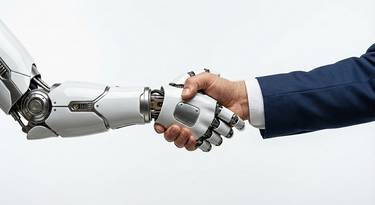
This era, the Fifth Revolution, centers on human and AI collaboration. AI accelerates analysis, prediction, and execution. Humans set direction, context, and accountability. Value emerges through workflow integration, governance, and skill evolution. Organizations that align strategy, data, and teams see higher productivity, lower operational drag, and compounding gains. The advantage comes from disciplined execution, not technology accumulation.
We've been talking about AI's transformative potential for years. The dashboards are built, the data lakes are full, and the machine learning models are trained. Yet here's the uncomfortable truth: only about 1% of organizations describe themselves as "mature" in AI deployment, with 30 to 40% of potential impact lost to fragmented systems and insufficient organizational redesign (The state of AI: How organizations are rewiring to capture value - McKinsey).
This is the gap between the Fourth and Fifth Industrial Revolutions. The Fourth gave us the infrastructure: data, connectivity, automation. The Fifth is where we finally extract value from it.
The Shift From Automation to Amplification
The European Commission coined the term "Industry 5.0" to describe this evolution. Their framework captures what many enterprise leaders are now experiencing: technology alone isn't enough. The question is no longer "What can we do with AI?" but "What can AI do for us?"
Industry 5.0 rests on three pillars: human-centricity, sustainability, and resilience. But the human-centric element is where the value unlock happens. Instead of replacing human judgment, AI amplifies it. Instead of automating decisions away from people, we're designing systems where human expertise and machine capability work in concert.
The market recognizes this shift. Industry 5.0 is projected to grow from $65.8 billion in 2024 to $255.7 billion by 2029, a 31.2% compound annual growth rate (The Industry 5.0 Index - Oliver Wyman Forum). This isn't speculative investment in potential. This is capital flowing toward realized value.
Why Industry 4.0 Stalled
The Fourth Industrial Revolution delivered remarkable capabilities: IoT sensors collecting billions of data points, cloud infrastructure enabling massive compute, and algorithms that could identify patterns humans never could. But capabilities without integration create what McKinsey calls "pilot purgatory," a proliferation of AI use cases unsupported by end-to-end processes, data governance, and organizational alignment.
The result? Only about 40% of companies report any enterprise-level EBIT impact from their AI initiatives. We built and bought the tools but didn't redesign the work.
The Fifth Revolution Difference
Industry 5.0 addresses this directly. Companies implementing collaborative human-AI solutions report 40% productivity improvements, 25% reduction in maintenance costs, and 30% decrease in unexpected downtime (AI and Industry 5.0: How GenAI + Human Expertise Creates the Next Manufacturing Frontier - IoT For All).
The difference isn't better algorithms, it's better integration of human judgment into AI-augmented workflows. Senior professionals become AI orchestrators, guiding machine outputs with domain expertise. Junior team members gain capabilities that previously required years of experience. The technology amplifies rather than replaces.
Where We Go From Here
The combination of human-centric, sustainable, and resilient approaches can add $1 trillion annually to global GDP beyond technology-driven profits alone (The dawn of Industry 5.0 - Rothschild & Co). That's not the value of the technology, that's the value of properly integrating humans with technology.
For enterprise leaders, the strategic imperative is clear: stop treating AI as a technology implementation and start treating it as a workforce transformation. The Fifth Industrial Revolution isn't about better machines. It's about better collaboration between humans and machines and that's exactly where the value lies.
Common Questions
Industry 4.0 focused on automation, data collection, and digital infrastructure. Industry 5.0 shifts focus to human-AI collaboration, emphasizing how technology amplifies human capability rather than replacing it. The Fifth Industrial Revolution is about extracting measurable value from the foundation built during the Fourth.
The European Commission formally defined Industry 5.0 in a 2021 white paper. However, the practical shift, where enterprises move from AI experimentation to value realization is happening now, with the market projected to reach $255.7 billion by 2029.
McKinsey research shows only 40% of companies report enterprise-level EBIT impact from AI. The primary obstacles are organizational, not technological: fragmented systems, misaligned incentives, and insufficient operating-model redesign create "pilot purgatory" where AI use cases never scale.
Start by auditing existing AI investments for integration gaps rather than launching new initiatives. Identify workflows where human expertise is bottlenecked and design AI augmentation around those pain points. The goal isn't more technology, it's better orchestration between your people and the tools you already have.
The most valuable skill becomes AI orchestration: knowing when to trust machine outputs, when to override them, and how to guide AI toward better results. Domain expertise becomes more valuable, not less, because humans provide the contextual judgment that machines lack. Organizations should invest in upskilling programs that teach employees to collaborate with AI rather than compete against it.
The Future of Value Creation
The infrastructure of Industry 4.0 is built. The Fifth Industrial Revolution is where we finally put it to work, but only for organizations willing to rethink how humans and machines collaborate.
The enterprises that thrive in Industry 5.0 won't be those with the most sophisticated algorithms or the largest data lakes. They'll be the ones that redesign their operating models around human-AI partnership. They'll move past pilot purgatory by treating AI not as a technology project but as a fundamental shift in how work gets done.
The $1 trillion opportunity isn't theoretical. It's available now to leaders who recognize that the value was never in the technology itself, it's in what your people can accomplish when that technology amplifies their capabilities. The question isn't whether your organization will participate in the Fifth Revolution, it's whether you'll lead it or spend the next decade catching up to those who did.